Creating chemistry in romance is important because this is what makes the reader root for the characters to find their happily-ever-after.
How do you create great chemistry?
 Create strong characters
Strong, interesting characters are key to creating chemistry in romance. If the reader doesn’t like your characters all that much, they won’t care if they end up happy.
This often means getting away from stereotypes and adding more depth to characters. Characters need flaws. Nobody likes the perfect, better-than-everyone-else character. Perfect characters don’t have enough conflict to be interesting. A strong character has strengths and weakness that will play a role in the story and their character development arc.
Create realistic attraction
This doesn’t mean no insta-love ever, especially if that’s going to be a source of conflict later when the character realize love at first sight doesn’t mean no problems, but the reason for their attraction should be believable.
Good looks aren’t enough. Being hot doesn’t prevent a person from being an asshole. Draw from personality, compatibility, intrigue, uniqueness…something that will last and create conflict later in the story.

Build realistic tension
Tension can come in a variety of ways, including miscommunication, lies, secrets, arguments, moving too fast/slow, etc. The key is for these to be realistic and fit with the overall story.
One rumor that’s never fact-checked or confronted and causes the MC to run away without looking back and fall into utter despair isn’t realistic and tends to frustrate readers. Especially if the MC is an otherwise strong and intelligent person.
If a point of tension can be fixed in less than a paragraph, it probably isn’t complex enough to be believable.
Create high stakes
There should always be something that can completely ruin a relationship, whether it’s developed from page one or a surprise two-thirds of the way through. The risk that everything could fall apart, and both or one of the characters knows this, will affect everything they do and act as a constant reminder to the reader that they shouldn’t assume everything will turn out all right.
 Develop intimacy
Intimacy doesn’t mean sex, although there’s nothing wrong with sex being part of intimacy. A look or a touch, a meaningful word can build intimacy between characters just as much as physical intimacy. Every time characters are together, give them a moment that notches up their connection in some way.
When characters are not with each other, use internal dialogue, conversations with others, or small reminders/tokens (a piece of clothing or memento left behind) to develop intimacy. Building intimacy should remind the reader of what the characters could be together.
Ride the roller coaster
Chemistry shouldn’t be a straight shot to HEA. Nobody likes another person all the time. Having moments where they dislike a trait or action is realistic and lets the chemistry ebb naturally. A thoughtful or sweet act will bring it back up, maybe even stronger. The give-and-take keeps readers interested and engaged.
Keep the roller coaster ride to a reasonable level that won’t throw readers off the rails. Ups and downs are natural and important in story building. The swings shouldn’t be so drastic you give readers whiplash, though. Keep the chemistry moving in a steady, upward direction toward the climax, with believable bumps and dips along the way.

 Start with a formula that works
 Choose your words carefully
 Creating a fictional town is definitely the most involved type of worldbuilding in contemporary realistic fiction. You’ll draw from real places with the goal of developing something new and interesting. A huge benefit of making up a location is that you aren’t bound by anything. Another benefit is that you won’t spend hours researching a real place and worry about whether you’ve portrayed it correctly. A fictional location allows you to build the exact setting you need to develop your plot and characters.
 Start off based in reality. For those who’ve watched Twin Peaks and paid attention to the opening credits, the welcome sign claims the town has 51k people, yet everyone knows each other and there seems to be only one restaurant. Take the time to research town sizes and amenities in order to make sure everything lines up.
 Whether you’re creating a fictional town or using a real town, you still need to develop the small-scale details of the neighborhood or apartment building your characters inhabit.
 Thinks Friends when you’re creating your characters’ daily habits and local haunts. Who’s apartment/house does everyone tend to hang out at and why? What features make it desirable? When they’re out and about, where do they often stop for coffee or to catch up, and how does that environment help the story? If characters need a quiet place to trade secrets or go over plans, a busy, noisy coffee shop might not work as well as a used bookstore.
 Similar to building a neighborhood, it’s important to develop the work or office life of a character. How much it needs to be developed depends on how important it is to the story. If a character has social anxiety, a busy and fast-paced office will provide conflict. If a teen character is itching for excitement but works at an outdated video rental store only a few old people visit every week, that also provides conflict. If work is only mentioned in passing to acknowledge that the character does indeed have a job, minimal development is needed beyond the fact that it eats up a large portion of their time and provides an income.
 A very important, overarching detail to develop is how your MC relates to the world. This is most often going to develop from backstory. Some writers develop the backstory first while others let it come to light as they write. The important thing about backstory is that it forms a starting point for your character and helps determine an end point.
 I’ve been editing a young adult project I wrote a few years back and never got back to, and it reminded me of a comment I saw on social media a while back about whether YA is an age group or a genre.
 It’s been a long time since I haven’t had a project that I was in the middle of and felt pressured to finish.
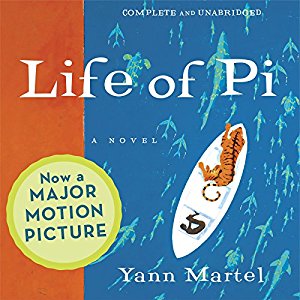 For those who haven’t read or seen Life of Pi, it’s about a young man who survives his ship sinking in the middle of the sea during a journey from India to Canada. He makes it to a life boat, but finds himself in the company of several of the zoo animals his family was transporting…including a Bengal tiger named Richard Parker.
 Infodumping is often a struggle for writers who do in-depth research for a book. You found out all these awesome things about whatever and now you HAVE TO SHARE THEM ALL! Unless you are writing a non-fiction book about your topic that is meant to give a detailed history of whatever, please, please, please for the love of all things bookish DO NOT vomit up every seemingly fascinating tidbit of research you uncovered while preparing to write your book.
 I also struggled to listen at length to the religious discussions, which I usually enjoy quite a bit. I think religion is a fascinating topic and enjoy learning about many different religions. What I didn’t enjoy was, again, too much straight information that took me away from the story, and the sometimes condescending way the information was presented. I don’t hold with any particular religion, but I was still bothered by the sense I got that if a reader didn’t agree with the author’s opinions on eating meat, practicing multiple religions at once, or who or what God or gods might be they were simply wrong or not as smart as the author. I enjoy learning about how others view God, religion, the Universe, etc., but in a way that invites thoughtfulness rather than looking down on others’ beliefs or viewpoints.
 Several years ago on a car ride my family and I started listening to “Unbroken” by Laura Hillenbrand. I downloaded it from Audible after only a cursory glance at the summary and checking the reviews. So, it wasn’t until several hours into the book that my husband and I both turned to look at each other and asked, “Is this book a true story?”
 Be mean to your characters all you want. Kill your darlings, right? However, if the end to every situation is a predictable close call or last second escape, readers will not only be annoyed they’ll lose interest. Have you ever watched Tim Allen in “Galaxy Quest”? They parodied this concept beautifully when the alien ship built to model the TV series spaceship is designed to stop its self-destruct sequence at 1 second because “that’s what always happened on the show.” It’s funny because we all now how irritating that “last second” save becomes after a while. While there are rare stories, like Zamperini’s, where people really do beat all the odds and survive the worst situations, most people fail and miss chances and get hurt.
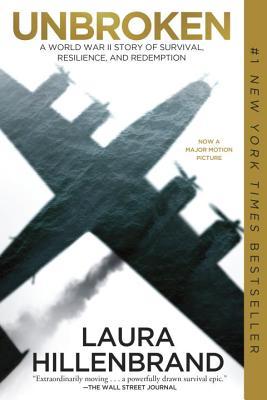 Louis Zamperini survived an incredible amount of danger and horribleness in his life, BUT there were deep scars left behind because of what he suffered. The last third of the book that deals with the aftermath of being tortured in a Japanese prison camp is very, very hard to listen to because the lasting damage is so real. I’ve read to many novels (especially YA) where the main character has some tragic past or experiences something truly awful…and bounces back like it was nothing. This is not one of those areas where reality needs to be downplayed. Let your characters be as broken as they need to be. Emotional scars are something we all understand. Characters need that element of reality to ring true with readers.
 Just to clear up any confusion right off the bat, bunnies are the worst! Sure they may look cute, hopping around with their cotton tails and twitchy noses, but it’s all a trick. They will destroy your grass by eating it down to the roots and by peeing and pooping on it like mad-which also kills the grass. They will also gnaw off the bark of your fruit trees, which is not good for them at all, and those freaky jackrabbits’ giant creepy teeth, I’m pretty sure, could chew through your ankle if it got the chance.
 A trope is a familiar and repeated (aka overused) symbol, meme, theme, motif, style, character or thing (anything) that is spread throughout a particular genre.
 Of course not. The key is to use them in their barest form. Strip them down to the essence of what makes readers connect with the trope to begin with, and add from there.
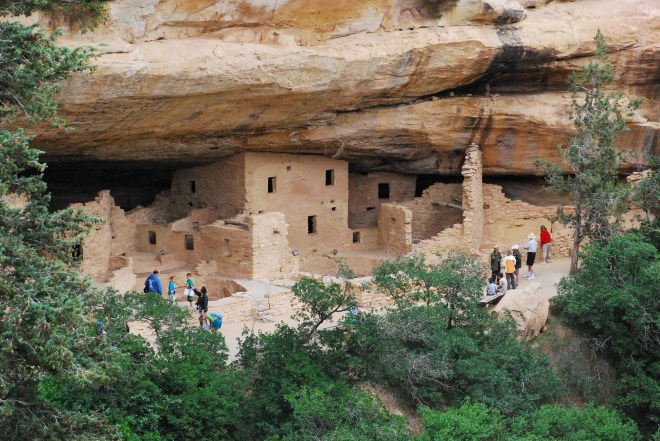 If you’re planning at trip to Mesa Verde National Park and hoping to explore the Spruce Tree House cliff dwelling, one of the largest and most popular cliff dwelling sites at the park, you’ll be limited to viewing it from a distance. Why? While we want all our visitors to experience the cliff dwellings, keeping guests safe is our top priority. Recent rock falls at the Spruce Tree House site prompted the decision to close it to the public for the first time in 50 years.
 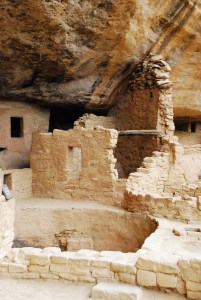 That covering worked for two decades, but in 1960, a 10-ton rock fell from the south end of the cliff overhang, hitting the nearby public trail and part of the Spruce Tree House site. Trained climbers pulled down a loose, five-ton rock in danger of falling to prevent it from doing more damage, and cleanup began. The previous covering put over the crack was removed and replaced with an anchoring system that would hopefully prevent the cracks from widening. These 42 anchors, up to 16 feet long, were drilled into the cliff face to anchor the arches in place, then the crack was filled with gravel and cement. This system held for many years, until recently.
 While flying does cut down your travel time, it also leaves you without a car. That’s not so bad when visiting New Orleans and staying at a hotel right in the French Quarter…mostly. While my husband was sitting through an EPA conference, my two kids and I walked all over the French Quarter, seeing the aquarium, kids museum, cemeteries, the double decker tour buses, and the butterfly habitat.
 For some reason, rather than just having the nice man at the hotel call us a cab, I thought we could make it to the zoo using NOLA’s public transit system. I had several maps which laid out the route to the zoo through various modes of transportation. It would be an adventure, right?
 They nicely pointed out where we should be standing. A platform in the middle of the road. The streetcar lines literally ran down the middle of the street, with cars driving on either side. Beginning to regret this adventure, we trekked safely to the streetcar stop, only to be followed by yelling. I looked around, hoping the shrieking isn’t directed at us, and found the nice lady who’d directed us yelling and waving at us. I was so startled, it took me a few minutes to figure out what she was trying to tell me.
 Because the streetcars run on rails, they run in one direction. What direction you want to go determines was side of the tracks you should wait on. We were on the wrong side. So, grabbing my kids’ hands again, we hurried across the rails to the other side of the middle of the street, and waited at the right stop.
 Seeing that I had two kids with me, the other tourists were extremely kind and let us get on with the first group. Ten minutes later, we finally made it to the zoo, and it was as fabulous as I’d been told. One of the best zoos I’ve visited. The only thing that wasn’t awesome was the fact that we had still had to get back to the hotel.
 USA Today Bestselling Author DelSheree Gladden