
I love to cook and bake, but I’m not the greatest at following recipes. I was in the kitchen with my mom from an early age, and most of the time I really don’t think I need to read the entire recipe (especially if it’s in a blog post that gives the entire history of a dish before getting to the actual recipe). I’m also not very good at planning ahead, so I often have to make substitutions and rush recipes (like not letting things rise for the full amount of time).

With New Mexico being under a stay-at-home order, I’ve been working from home and have had more time to prepare meals most days. So, I’ve been making an extra effort to plan ahead and follow the recipe more closely.
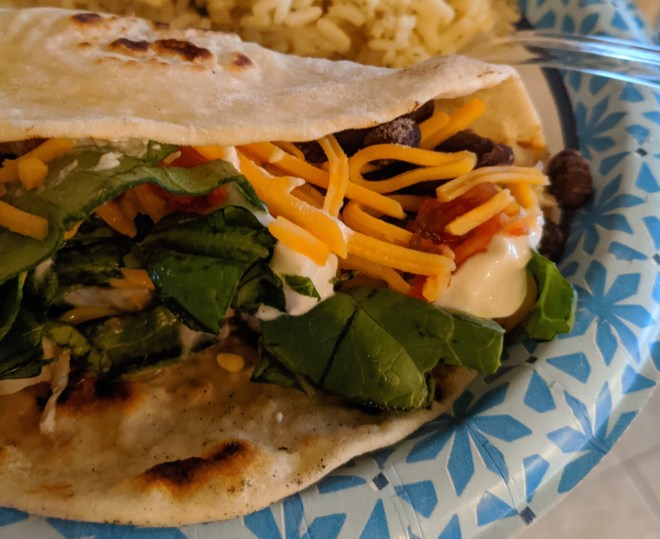
I’ve made tortillas a few times, usually from a mix, but with the shortages at the grocery stores right now, I ended up making some from scratch. I followed the recipe to the letter, including kneading it for the full amount of time (which I almost never do). They were the best tortillas I’ve ever made!

What does this have to do with writing?
Writers often feel pressured to get the next book out as as soon as possible to keep readers attention. Some say that writers need to release something every 90 days. This can lead to lower quality writing due to rushing, skipping steps, or not preparing well enough.
A recent book club I led for work featured a contemporary romance from a fairly well-known author with a big backlist and a lot of followers. The group was pretty much unanimous at the end of the reading session that this book suffered from the three problems I just mentioned. The characters were often flat and unrealistic. The story never really seemed to go anywhere because there was a lack of real conflict, and many of the scenes felt like filler used to make the target length.
While it is important to produce consistently, quality is more important. Whether in baking or writing, prepare, don’t rush, and don’t skip the steps it will take to make a project a success.
- Characters need fleshed out backstories and motivations
- Every chapter needs conflict
- Conflict should build to the climax and mean something to the reader
- Outline or storyboard to make sure you have enough content for the word count or end it when the story dictates
- A storyline should compel readers by making important promises to the reader at the beginning and fulfilling those promises by the end
- Don’t rely on readers “buying anything you write” just because they’re fans
Putting in the work for a story is just as important as it is for a meal if you want to produce something people will love. The tortillas, paired with the fish my husband made, were definitely a success!

 Writing to market also means knowing general audience expectations, likes, and dislikes. Generally, readers don’t have a strong preference for standalones or series, a plot that moves quickly and well-developed characters keeps readers from putting down a book, blurbs and book covers that don’t accurately portray a book upset readers, readers prefer to interact with authors on Facebook more than other platforms, most readers do want to interact with authors, and readers pay attention to reviews.



 Sweet
Sweet No explicit sensuality, kissing and touching is okay but physical descriptions are limited to general terms or are only implied. Physical acts should be focused on the emotional elements rather than explicit description. Off-screen sex is alluded to and left to the reader’s imagination. Think PG-rated movie.
 Moderate explicit content and sensuality. Sex is described, but not in graphic detail. The emphasis stays on the “lovemaking” and emotions, not the act. Euphemisms are more common and many details are left to the reader’s imagination. Sexual tension is used throughout, with more touching and some undressing involved, and there are usually only one or two sexual scenes in the whole book. Think PG-13 rated movie.
 Very explicit sensuality and a deeper focus on sexual feelings, desire, and physical sensations. Sex scenes are longer and may have 2-3 in the book. Character thoughts are focused more on sexual urges and desires and sex is graphically described with specific body part words used and strong euphamisms. There may be light exploration of less-traditional sexual activities. The emotional aspect of sex is still important and should be balanced with the physical sensations. Sex scenes should further the story, not overtake it. Think R-rated movie.
 Extremely explicit sensuality and descriptions with a strong focus on sexual thoughts, desires, and needs. Sex may be the primary focus of the story, but it still has a full-arc storyline and strong emotional elements. Sex often includes non-traditional elements such as light BDSM, use of sex toys, ménage or other forms of “kink.” Profanity is more common and graphic language is used in descriptions. There are usually multiple sex scenes throughout the book. These stories can’t be told adequately without the sexual content. Think NC-17-rated movies.
 Plot: the main events of a play, novel, movie, or similar work, devised and presented by the writer as an interrelated sequence.
 Plot should guide the reader through a story, providing pertinent information and raising questions that will keep them interested. Plotting gives the writer the chance to recognize important questions and provide the answers in a satisfying and compelling way. This applies to both pantsers and outliners, though it may progress in different ways.
 Consider the questions asked about the egg-buying character. Eggs are most likely not the real conflict. In attempting to answer some of the questions about this character, the possibilities are endless.
 One of the key elements in writing strong female characters (and this applies to writing strong characters of any gender), is understanding the difference between behaviors and personality traits. Behaviors are things a character does (what we do), while a personality trait is how a character behaves, thinks, and feels (what we are). Personality traits are difficult or impossible to alter, while behaviors can be changed.
 Fighting: perhaps the character grew up in a rough home life and had to defend herself from a family member, bully, gangs, etc. Perhaps she was a victim and learned to fight for protection.
 Foretelling: Had I known the darkness forming in my mind weren’t my own thoughts, I would have attempted to defend myself.

 In my continuing quest to read more of the classics, we listened to Fahrenheit 451 on a summer road trip. My kids are 12 and 15, and they really got into the story. It turned out that my son had to read this in school this year, but for some reason I never had to read this in high school. Instead I was slogging through Great Expectations and The Iliad…
 Let me start by saying that after we listened to Fahrenheit 451 we watched the HBO movie version, and I actually enjoyed it quite a bit. No, it was not the original story. That’s okay. BUT…one of the changes we were all most disappointed by was that Guy’s wife Mildred was completely written out of the story.
 USA Today Bestselling Author DelSheree Gladden