
Fiction Vs. Reality…And the Author’s Responsibility

I was going through my list of drafts in my blog roll and found this title but no content. I think there was a specific review or article that inspired this debate, but I can’t remember what it was lol!

Either way, it’s an interesting topic.

Typewriter illustrationSeveral years ago on a car ride my family and I started listening to “Unbroken” by Laura Hillenbrand. I downloaded it from Audible after only a cursory glance at the summary and checking the reviews. So, it wasn’t until several hours into the book that my husband and I both turned to look at each other and asked, “Is this book a true story?”

Why ask that question?

Because it was too unbelievable to be fiction!

Louis Zampirini’s life was quite literally unbelievable in many ways. As history, it’s fascinating and incredible. As fiction, readers would have rolled their eyes at how many dangerous and crazy situations he got into and survived! If you haven’t read the book, please do, you’ll understand so much better what I’m talking about.

So, this question is…where is the line as a fiction author? How do you balance crafting a compelling and engaging story without making it unbelievable? Here are a few tips I’ve learned over the years.

1. Characters lose more often than they win.

Depressed woman portrait

Sure, most days in reality are pretty routine, and we all have those days where everything just goes right. Is that interesting to read about? NO. In real life, maybe the boring days and good days are the norm, but the days and weeks we struggle and fail and do stupid things and hurt the people we love are the ones that push us to grow and do better, or maybe to give up and throw our hands in the air. Readers are pulled in by the struggle. They can connect and empathize with lousy days and bruised emotions.

2. There are only so many times you can win or escape.

galaxy questBe mean to your characters all you want. Kill your darlings, right? However, if the end to every situation is a predictable close call or last second escape, readers will not only be annoyed they’ll lose interest. Have you ever watched Tim Allen in “Galaxy Quest”? They parodied this concept beautifully when the alien ship built to model the TV series spaceship is designed to stop its self-destruct sequence at 1 second because “that’s what always happened on the show.” It’s funny because we all now how irritating that “last second” save becomes after a while. While there are rare stories, like Zamperini’s, where people really do beat all the odds and survive the worst situations, most people fail and miss chances and get hurt.

3. Going through traumatic experiences have lasting effects.
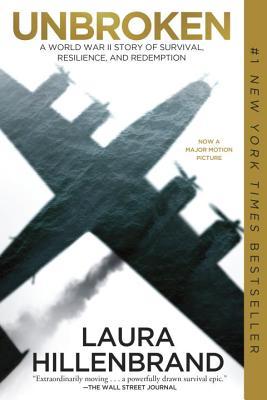
unbrokenLouis Zamperini survived an incredible amount of danger and horribleness in his life, BUT there were deep scars left behind because of what he suffered. The last third of the book that deals with the aftermath of being tortured in a Japanese prison camp is very, very hard to listen to because the lasting damage is so real. I’ve read to many novels (especially YA) where the main character has some tragic past or experiences something truly awful…and bounces back like it was nothing. This is not one of those areas where reality needs to be downplayed. Let your characters be as broken as they need to be. Emotional scars are something we all understand. Characters need that element of reality to ring true with readers.

4. Romance has more leeway, use it.

Most people are fairly rational, even when it comes to relationships. Love can conquer all in movies and romance novels, but real people often give up on difficult relationships and choose not to take risks. Now, I’m not saying all romantic stories have to be 100% HEA, “Enchanted” style storylines. What I am saying is that in romance readers  expect a little more of a break from reality. Let your characters make rash decisions or fall too hard too fast. It’s okay if their choices wouldn’t be completely rational or logical in real life. A lot of romance readers want the escapism, the fantasy. Don’t go overboard, but bend reality a little when it enhances the love story.

Enchanted

Balancing fiction and reality is tough, because the line between captivating and irritating a reader can be thin. Stretch reality when it enhances the story, not when you want an easy way out of a situation.

3 Tips for Researching #Paranormal (for your writing) #research #podcast

For Halloween, I decided a paranormal themed podcast was in order! Read the transcript or listen to the podcast for tips on researching paranormal for your writing and incorporating what you learn into your story.

//html5-player.libsyn.com/embed/episode/id/4789834/height/360/width/640/theme/standard/autonext/no/thumbnail/yes/autoplay/no/preload/no/no_addthis/no/direction/backward/no-cache/true/

The blending of fiction genres has led to a variety of paranormal subgenres, from paranormal romance to paranormal military fiction. Readers love paranormal fiction, but they expect it to be either factual or wholly unique. Now, when talking about factual paranormal fiction, what do I mean? I mean researching the common theories, terms, mythos, and culture. Writing paranormal may sound as easy as throwing in a few ghosts or vampires. Writing paranormal that truly draws in readers takes a little more than that. Today I’ll discuss how to research paranormal and incorporate what you learn into a convincing story that will capture reader’s attention.

Research

How do you find reliable information on your chosen paranormal topic? That’s a tough question, because when you type “ghosts” into a search bar, you’ll get anything and everything. There are two important aspects of researching the paranormal for a work of fiction.

First:  You’re not looking for a scientifically proven set of facts. You’re looking for the general consensus among a community of believers. What are the hallmarks of belief in ghosts? What do most accept as standard and what are the outlier theories? What is dismissed outright? Talk to people who actually believe and participate in the culture. It’s important to understand the core beliefs of a paranormal topic in order to ground your story in the basics. Then you can take it where you will.

Second: Learn the culture. Given that I’ve been working of The Ghost Host: Episode 2 lately, I’ve been researching ghosts, ghost hunting, and concepts of the soul and afterlife. Even though Echo doesn’t need as many physical tools as the average ghost hunter who can’t see ghosts, it’s important that she knows what others are using to confirm her talents and explore their own paranormal experiences. I need to know about EMF, EVP, protocol for séances, what herbs are involved in ritual cleansings, and more. Know the terminology, tools, and implements of your topic so your character can convincingly belong to that world.

Applying what you’ve learned

The tough part of research is that you learn thousand things when you only needed to know about one. A mistake writers sometimes make is trying to cram everything they learned into their book. Just because a reader is interested in ghosts doesn’t mean they want a chemical breakdown of why salt disrupts spiritual energy.

When incorporating your research into your stories there are two questions to ask:

Is this integral to the plot? If it is, blend your research into the story as needed. Don’t info dump. Give the reader only what they need to know in each scene in order for them to suspend disbelief and stay involved in the story. Add research as you would leave pieces of a breadcrumb trail: Just enough to follow along.

The next question you want to ask is: Will this help create a believable setting or world? In The Ghost Host, I mention that one of the characters sleeps with a hex bag under his bed. Other than a brief mention of what “might” be included in a hex bag, I don’t go into any more detail. The story itself doesn’t deal with hex bags. I used it only to add to Kyran’s character and illustrate that he comes from a family who believes in the occult and doesn’t think twice about what others would consider odd.

If a bit of research doesn’t enhance the story or help with world building, save it for something else.

Suspend your own disbelief

Writing paranormal fiction, by its very nature, requires authors to write in a way that convinces readers to put aside typical logic and science and accept the unexplainable as fact. You can’t convincingly do that unless you as the writer can do the same thing. Now, just because you write about vampires doesn’t mean you have to believe in them. You do, however, need to believe they could exist in the world you’ve created in order to convince a reader to believe.

This requires the paranormal aspects of your story to hold equal weight with the plot and characters. A brief mention of one character believing in something paranormal during the course of plot and character development doesn’t constitute a complex blending of story and paranormal. If the main resolution of the story hinges on the paranormal, it can’t come as a surprise to the reader. No one likes to get involved in a coming of age story only to have a horde of ghosts jump out at the end to resolve some critical plot point. Trust me, it happens.

Even in “The Sixth Sense” where the twist is that Bruce Willis is in fact a ghost, the entire storyline revolved around the viewer believing that ghosts are real and involve themselves in the world of the living. Had there been absolutely no mention of the paranormal and the story focused only on a young boy receiving counseling for behavior issues, only to have Willis suddenly figure out he’s a ghost with unresolved issues and the boy knew it the whole time, would have been confusing at the least.

Just as when an author researches another culture, specific location, scientific breakthrough, or historical event, due diligence is required in order to fully capture what they are researching. There are many people around the world who believe in the paranormal. If you intend to write an authentic account of someone experiencing paranormal phenomena, treat it the same way you would write about anything else. Your fiction may be someone else’s real beliefs, and they’ll spot lazy or halfhearted work a mile away.

research-paranormal-wpr-long

Genre Tropes are like Bunnies

To listen to the Write. Publish. Repeat. podcast version, CLICK HERE.

2015-04-21 09.07.18Just to clear up any confusion right off the bat, bunnies are the worst! Sure they may look cute, hopping around with their cotton tails and twitchy noses, but it’s all a trick. They will destroy your grass by eating it down to the roots and by peeing and pooping on it like mad-which also kills the grass. They will also gnaw off the bark of your fruit trees, which is not good for them at all, and those freaky jackrabbits’ giant creepy teeth, I’m pretty sure, could chew through your ankle if it got the chance.

Bunnies are NOT cool.

And, neither are overused genre tropes.

What is a trope?

Trope DefinitionA trope is a familiar and repeated (aka overused) symbol, meme, theme, motif, style, character or thing (anything) that is spread throughout a particular genre.

The problem with tropes is not necessarily that it kills your story, like bunnies will do to your lawn, but they have the potential to kill your readers’ interest in your story.

How?

When a reader picks up a book and sees the same types of characters, the same pattern behind a storyline, the same hints that his 16-year-old nobody is destined to save anything and everything by discovering their deeply buried inner strength/power/importance/etc., they start to see how the story is going to end, because well…they’ve read it before. Maybe the names have changed, or the setting, or the mythology, or whatever, but if the overall concept is something every other genre writer is using, readers are going to pick up on that.

Is that to say you can’t ever write using some of these tropes?

Blonde Upper BodyOf course not. The key is to use them in their barest form. Strip them down to the essence of what makes readers connect with the trope to begin with, and add from there.
Weak, friendless, unimportant teen becomes the hero? Check. We’ve all been there, so we identify with those emotions and frustrations, and especially the hope for something more.

Self-conscious, doesn’t understand her own worth heroine who thinks she’ll never find love. Again, check. Everyone has those moments of thinking they aren’t good enough to find their happily ever after.

The problem with tropes isn’t that they exist and are used. The problem arises when writers stop there, and don’t expand, delve deeper, experiment, make it unique.

If your male lead has commitment issues, give him a REAL reason for his fears or avoidance. Being too awesome to be tied down isn’t going to cut it in most cases.

Your teen hero is going to save the world? Fabulous, but make him or her take a different path to get there than the typical camp/school/mentor/etc.

What new, exciting, difficult, gut-wrenching ways can your characters develop into their final self? It doesn’t have to be so complicated that solving the prime number equation looks easy, but it does need to be unique to your story, character, and plot.

Working with teen writers over the summer, most start out with fan fiction. It’s a great place to start, because a lot of the difficult world and character development is done for them and they can focus on the story and figuring out their style. It’s a great learning experience, and it’s okay that their stories often end up being a mishmash of all their favorite books, because they’re working on their craft.

However, as that writing skill develops, we need to move away from well-worn tropes and begin experimenting with new, fresh concepts that will take a story from something frustratingly familiar to one that stands out from all the others.

So, don’t let the bunnies destroy your grass, and don’t let your story get passed over because it’s just more of the same.

Open Blue Book

#AuthorChat with @TS_Krupa

Last week I was able to try something a little different!

https://blab.im/ts-krupa-authorchat-with-delsheree-gladden” target=”_blank”>TS Krupa, author of “The Ten Year Reunion,” invited me to chat on a new-ish platform called Blab. The neat thing about this is that you get audio and video, split-screen, as you watch the chat session. It was so much fun!

The replay of the chat is stored on the site and available to watch at any time!

https://blab.im/ts-krupa-authorchat-with-delsheree-gladden

author chat

The Fear of Imperfection

One of my students this spring was interested in writing for magazines, but felt held back by her fear of putting something out there that wasn’t perfect. She wanted my advice on how to overcome that.

Honestly, that’s a really hard thing to give advice on, because every writer is different.

I’m going to attempt it anyway!

#1: Realize no one’s work is perfect

DeathtoStock_Clementine9.jpgYou’re not the only one who makes mistakes. We all do. While I was on a panel at Denver Comic Con last year, we were all asked what was the biggest mistake we ever made in a book. Jim Butcher was on that panel as well (which was seriously the highlight of that entire weekend!) and he said when writing the early Dresden Files books, he didn’t have the income to visit Chicago, where the books are set, and wrote a scene with characters meeting in the parking lot of the baseball stadium. Problem was, that stadium was built before the majority of people had cars. Hence: it has no parking lot.

If you need more examples…check out THIS LIST of the best/worst plot holes in movies. You could literally spend all day watching or reading similar lists.

#2: Waiting on perfection = Missed opportunities

Perfection is unattainable. In life, and in writing. No matter how many times you read your article, book, or story, there will be something you want to change, tweak, fix, whatever. It will never be done. At some point, you simply have to be DONE. Do your best, and then put it forward. I know authors who refuse to ever read their own books again once they’re published. If they do, they’ll want to go back and change it.

#3: You’re your own Worst Critic

This can be a good thing when working through plot holes or character inconsistencies. When it comes to nitpicking your own writing, you will drive yourself crazy before you’re satisfied. Writers are often too close to their own work by the time they get to that final stage of editing. One word or comma likely won’t make the different between success and failure.

#4: Failing is OKAY

If you put out an article or book and it gets ZERO view or buys, is that the end? No, it’s a hurdle you just jumped over. Whether you breakout from day one or have to slog through mediocrity to achieve something better (like the majority of us) you’re on your way. That typo in your first paid blogpost, or character you forgot existed and was never heard from again, are a right of passage. We’ve all done it, and laugh about it later.

Never putting anything out there DOES mean you’ll never have to face rejection. It also means you’ll never get that message from a reader who loved what you wrote and wanted to thank you for sharing it with them. Those come a lot more often than the obnoxious ones pointing out that one typo.

Open Doors and Plot Holes

Death_to_stock_Dinner_damo_8.jpgMaybe this only happens in my house, but unlike the picture above with nicely closed cabinet doors, I can walk into a room and, no kidding, there is almost always at least one drawer, cupboard door, or package of something or other left open. Usually, more than one. There have been times when I’ve walked into the kitchen and literally every cupboard door is standing open because someone was looking for something and, after finding it, walked away.

What does this have to do with plot holes?

Your readers are like one of my kids looking for the bag of chocolate chips they want to add to their spoon of peanut butter. They keep looking for the answers you’ve promised them, scouring every page, rereading when they think they might have missed something, or silently working out all possible endings when they’re forced to put down a book and pay attention to real life for a few hours.

Those times when all the cupboard doors are left open because they have to search that hard, it often results from one of two things:

1: They’ve opened every other door in the kitchen and are reaching for the last one, opening it slowly, only to find, the cupboard is bare and the answers you promised aren’t actually in the kitchen, or anywhere…and they walk away, annoyed and vowing to never read anything of yours again because, dang it, when you want a snack and can only find celery sticks that make your mouth itch, your definitely not going to take the time to clean up your mess.

OR

2: They reach for that last cupboard door, pull it open and – because you’ve done an impeccable job of filling in holes and stretching out your reveals – all those awesome answers come flooding out at the very end for your reader to gobble up as hungrily as my kids might those cookies I tried to hide from them, and abandon the kitchen in complete satisfaction…forgetting to close all the cupboard doors.

The point?

Little Blond GirlJust like when my kids (my daughter specifically) stomps away, annoyed I haven’t purchased sufficient snack-worthy foods, your readers will walk away when they finish a book unsatisfied because of questions you never answered if your book leaves them with option #1.
I’ve been teaching a self-editing class this semester, and one of the best tips for avoiding plot holes is to re-outline your novel or story as you do your first major edit.

Why?

Editing sucks, right? 90% of writers will agree with me on that, I’m pretty sure.

Outlines suck even more. Okay, maybe only other pansters will agree with me on that, but that’s got to be at least 50%, right?

You know what sucks more, though? Having a reader leave a nasty review…one that’s legit and calls you out on shortcuts you took or hints you failed to live up to.

During your first major outline, take the time to outline your book, taking note of all the hints you added in, the questions you posed, and the bits of backstory you teased your readers with.

Did you follow up on each and every one?

If not, you have two choices:

1: Nix it. If you never followed up because that particular tidbit simply didn’t pan out, remove it.

Questions2: Fill in where you neglected to follow through. Any questions you posed that pertain to that particular book (notice I’m not talking series-length questions) make sure you have an answer, or make it apparent that question will be answered in a subsequent book, if you’re working on a series.


Most readers have a Love/Hate relationship with valid cliffhangers.

ALL readers have a Hate/Hate relationship with lazy writing that leaves them questioning why they purchased a book.

Don’t let your readers down. Answer every question you ask, even the ones you might have forgotten about from those first few chapters when the concept of your story was still in flux. You’ll thank yourself later, and so will your readers. Nobody wants to end a book like Lost Season 6, trust me. Rants are still happening about that finale six years after the fact.

Writing a Query Letter: Part 3

To find the first part of this series, Click HERE. For Part 2, click HERE. To listen to the full discussion on the Write. Publish. Repeat. Podcast, click HERE.

Paragraph Two of the Query Letter

9e9dd-largestackofbooksMini-Synopsis
Similar to the back cover summary
100-250 words

Expand on your hook
Explain more about your Main characters…
Problems/conflicts…
How adversity changes them…

Read back covers of other books for examples!

Paragraph Three: Bio

Brand new Author?
(You may want to skip this)

  • What to include?
    Is it meaningful to the query?
    Does it show personality?
  • Keep it short
  • Keep it writing related
  • Education
  • Work
  • Personal experience
  • Research

Publishing Credits/Awards

  • Awards
    • If you’ve won them…INCLUDE THEM
      Don’t be modest, but don’t go overboard

Publishing credits (BE SPECIFIC)
Journals
Online/trade magazines

Unpublished?
You don’t need to say

Academic or Nonfiction?
Shows you know the process

DON’T INCLUDE:
Church news letter, credits unrelated to professional writing

Self-Published: Include or Not Include?

  • Timing
    • It will be discussed eventually
  • Doesn’t hurt your chances
  • Be confident
  • Be ready discuss success/failure
  • Do you consider it a Mistake/Irrelevant
    • Leave it out
  • Does it make you a more desirable client?
    • Depends on success – mention sales numbers, length of time on sale
      • Success to some agents/pub = 5000 sales (per month…)

Open Blue BookWhat NOT to Mention

  • Social media presence/platform
    • UNLESS you have A LOT of followers
    • Agents will Google you anyway
  • Marketing Plan
  • Years of effort and dedication
  • Family/friends opinions
  • Past rejections/near misses
  • Apologize
  • Compliment your work
  • Discuss $$ your book will make

Thank You/Closing

  • Thank the agent/pub
  • Time & consideration
  • Alert agent/pub full manuscript is available upon request
  • Mention if your book is being considered by another agency
  • Series potential/written
  • Include contact information basics
  • Only offer exclusives for a short time period
  • Only compare your book to another in terms of style, voice, theme (Not $$)

Join me next week for a discussion on writing a great blurb for your query.


Listen to the full discussion now on my new podcast!

Write. Publish. Repeat. Podcast: How to Write a Query Letter Without Going Completely Crazy

WPR Header Image

Creating a Protagonist With Depth: Part Five

If you haven’t read the first three part in the series, you can find Part One HERE, Part Two HERE, Part Three HERE and Part Four HERE.


Now let’s discuss how to make your characters fail in a way that makes them better.


iStock_000024086772Large

Failure

Just like nobody enjoys a perfect character, no one likes a character that always makes the right choices and succeeds
If your character always succeeds, where’s the tension, the worry that they might fail? Without that, readers get bored.
A story needs fear that the character will fail/die/be beaten in order to keep readers flipping pages.
Even if they think they know where the story is going, they want to find out how they’ll get there


 How do you make them fail? Rope 2

Look back at their list of faults and flaws. Which of those can you use to put them in a situation where making the right choice will be difficult?
In “What We Saw At Night” Allie doesn’t tell the police what she saw because she’s afraid of getting in trouble for being somewhere she shouldn’t.
Why was she out at night? Because she has a severe sun allergy and has started taking risks because she thinks she won’t live very long.


hand over mouthHow do you avoid nonsense failure?

Does it make sense in real life?
If some guy told you he was sneaking into your room to watch you sleep at night, you’d freak out. Bella, though, was totally cool with it, which has garnered criticism.
Would two parents ever actually split up twin girls and never let them see each other for their own selfish reasons like they did in The Parent Trap? I highly doubt it.
When helping characters make decisions, make sure there’s a good reason for what they choose. Lean on that backstory you crafted.
Do their fears influence them?
Have past hurts caused them to mistrust others when they shouldn’t?


What character failures have left an impression with you?


Creating a Protagonist with Depth: Part 1

Where do you start when you want to create a really great character?

That’s a question that any writers, bot new and established, ask. There’s no black and white answer, but this series will offer up tips on creating strong characters that are layered and offer readers a reason to connect and share their story.

Today, I’ll start off with two popular options for getting started on Character Development.

Option One

Character ProfilingCharacter Traits

  • Start with the basics: Who is your character?
    • Create a character profile sheet and be as detailed as possible
      • Physical characteristics
      • Eye/hair color, weight, height, etc.
      • Personality traits
      • Happy, gloomy, morose, optimistic, etc.
    • Likes/Dislikes
    • Fears/Dreams
    • Talents/Goals
      • Secret or otherwise
    • Flaws
    • We’ll talk about this on in more depth later

Option Two

Start with a Picture

Instead of starting from scratch, find a picture you think is interesting and describe what you see. Go deeper than how they look. What motivates these characters? What are there goals? What are they afraid of? Start making a list of character traits that will help bring them to life.

Take a look at these two characters and tell me what they’re afraid of, why someone might be afraid of them, what they love, what they dream about, what their favorite flavor of ice cream is, or even what their secret fears are. Most of what you come up with you won’t actually use, but it will help you understand them.

I’d love to hear what you come up with for these two characters, so feel free to post your ideas in the comments! And don’t forget to come back for the next installment of Creating A Protagonist With Depth next week.

#Perfectionism and #Writing…

I think a lot of writers will agree that making sure their books are “perfect” is a bit of an obsession. 

We obsess over every word, line, paragraph, chapter… you get the point. We’ll research something until our fingers are about to fall off from too many internet searches. Our friends will be sick of hearing about a particular troublesome scene and threaten to throw a book at us if we ask them to read it one more time. 

Having said all of that, I completely agree with Anne Lamott when she said… 

“Perfectionism is the voice of the oppressor, the enemy of the people. It will keep you cramped and insane your whole life.”

All that obsessing over how we write our books or scenes can really kill a story. When you over think while writing, you second-guess your decisions, which leads to endlessly rewriting particular scenes, changing whole passages to try it another way, or scrapping the whole project. 
Now, yes, sometimes these things have to be done, but not every time you sit down to write. If this is your process, it’ll be awfully hard to ever finish a book or story. Every writer has to develop their own process, but here are a few tips I’ve picked up over the years. 
Tip #1: Whether you like to outline or not, don’t limit yourself to sticking to your outline or notes verbatim. If you feel like the story needs to take a left instead of a right, or a U-turn in a whole new direction, go with it. Let your plot develop organically and don’t feel like you have to go back to an outline and re-outline after every change. Just write. 
Tip #2: Don’t edit while you write. You’ll kill your progress if you go back and edit what you’ve just written. Give yourself some time to let that chapter or scene sit and solidify. Even if you have to reread a chapter or two when you come back so you know where you left off, DON’T EDIT, aside from maybe a few typos. Even when you finish the entire book, don’t jump right into editing. Work on something else. Give it at least a week (longer if you can) and come back to it when you have fresh eyes. 
Tip #3: Sending your work out to beta readers (readers who read an early draft in order to give you feedback and suggestions) can be anxiety laden. It always is. Waiting to send it out until your book is perfectly edited and all the holes are filled in just isn’t reasonable. Find beta readers you trust to be honest, let them know it’s not a perfect story and you need helpful critiques, and hit the send button. There are always problems with a manuscript that you as the author won’t be able to see. Waiting until it’s perfect just prolongs the inevitable and often leaves you with more revisions to make than you would have had otherwise. 
Tip #4: Give yourself permission to make mistakes. Don’t want to put a scene on hold to do a little research? Not sure if what you’re writing is possible, but the scene is just begging to be written? Great! Keep writing! You can always go back and correct mistakes. In fact, you usually learn a lot from making those mistakes, and then you don’t make them as often in the future. It’s tough to get into a writing groove sometimes, and if you’re in one, let yourself just get your ideas down on paper and worry about refining later on. 
Tip #5: Accept the fact that your book will never be perfect. That’s just how it is. There will always be something you think could have been better, or should have been changed. Reviews will make you doubt scenes or chapters or endings. It will never, ever be completely perfect…and that’s okay. 

What perfectionist habits keep you from getting things done?