Publishing Primer: Publishers

What does it mean to have a publisher? Are you better off with one or without one?

DeathtoStock_Creative Community9What is a publisher?

This is a more difficult question to answer than you might think!

Later on, we’ll discuss the different types of publishers, but for now, let’s start with the basics:

A publisher is a person/company that issues books/journals/etc. for sale.

Prep your manuscript for publishing.

Other aspects depend on the particular publisher.

Dollar SignWhat are the advantages to having a publisher?

Cost
A reputable publisher should NEVER ask the author for money.
What costs are publishers fronting?
Editing: $500-600
Cover design: $100-600.
Formatting: $100-300

Time
Editing, formatting, design all take time away from writing
The author is free to pursue other interests like writing or marketing
Setting up a book for publishing also takes time

Expanded Distribution/Marketing Options
Publishers can get into places that authors often can’t
EX: book signings at chain stores, special programs, “in stock,” events, etc.
High volume production = better deals from printers or events

iStock_000023280434LargeHelp
Teamwork
More creditability (Sometimes)
Answers to questions

Marketing
Varies GREATLY
Smaller publishers = greater amount of marketing
Your success = their success
Larger publishers = bigger budgets and marketing departments
Some of the costs of marketing will be taken on by the publisher

Next time we’ll discuss some of the disadvantages of publishers.

If you’d like to learn more about the pros and cons of Agents, you can find part ONE here and part TWO here.

Publishing Primer: Agents

What is a literary agent?Blond Business Woman

A literary agent represents authors and submits to publishers and editors on their behalf

  • They also:
    • Negotiate Contracts
      Promote
      Negotiate contracts outside publishing
      Mediate

What are the benefits of having an agent?

  • Open Doors

    Avoid the slush file
    Pre-vetted status
    Bypass slow steps
    Agent only options

  • šKnowledge

    š“In the know”

    šDepends on how good the agent is and how good their contacts are

    šAccess to specific information

  • Mediation

    Navigate disputes
    Knowledgeable in: publishing contracts, foreign rights, media rights, royalty negotiations
    Disputes are common occurrence
    **Getting a lawyer involved is sometimes necessary

  • Advice

    Guidance for new authors
    Knows the book market and current trends
    Marketing opportunities
    Timing

What are the drawbacks of having an agent? 702f1-girl2bwith2bbooks

  • Money

    Legitimate agents will NEVER ask you for money
    Do get a cut of the royalties
    Domestic sales: 10-15%
    Foreign sales: fixed rate of 20%
    Film/media sales are usually negotiated separately

  • Time

    Querying can be SLOW
    Once you have an agent, querying starts all over again with publishers
    How long?
    A few months to several years
    It may not happen
    There should be a time limit in your contract

  • Control

    Once you sign, publishing options may be more limited
    Submissions are handled directly by your agent
    Additional work you write may automatically come under the agent’s control
    Variations of your book that are produced (film, graphic novel, audio, translation, etc.) may entitle your agent to a cut

Stop back by soon for more discussion on Publishers, Agents, and Publishing in this new Publishing Primer series.

A Ten Year Journey

Crowd at ConcertI think two of the most common questions I get when I do public events are 1) How long does it take to write a book? …and… 2) How did you get you first book published?

Question #1 always makes me chuckle a bit because the answer varies depending on the book. Question #2 is kind of a long story.

So, I thought I’d share the answer two both questions today in regards to my very first book, Escaping Fate.

How long did it take me to write it? Well…I started writing Escaping Fate when I was fifteen, back when I knew next to nothing about writing and thought I was really good at it. I wasn’t. Anyway, a lecture in Mrs. Hume’s history class about Aztecs performing human sacrifices really got me interested and I started researching. Back then, that involved digging out an encyclopedia and scouring the library for resources since my parents weren’t big fans of the internet at the time.

The first version was super short. It fit inside a chunky 6×4 inch paper notebook. Yeah. It was short. Eventually, I started transferring it to my first laptop, which was a brick and weighed a ton, and I started adding to the story. Actually, I removed an entire character and rewrote the story with only the MC, Arrabella, and her grandfather. That took a while. A long while. REWRITE #1.fdd11-escapingfatefront

Some time later, I met my future hubby and found out he was into writing too. Don’ tell him I told you that, though. He likes to keep his writing on the DL even though it’s really good. And I’m not just saying that because he’s my husband. Seriously, it’s good stuff, and if he ever actually lets anyone outside me and his brothers read it, you’ll agree.

Anyway…my hubby and I chatted about writing and when I mentioned nixing poor Tanner from the book, he talked me into putting him back in. After all, every story needs a little romance, right? REWRITE #2.

Years later, after getting married and having two kids and doing some college here and there, I pulled Escaping Fate back out, reread it, decided it was still missing something, or several somethings, and went back to work ironing things out, changing POV and tense, adding in more story elements to keep things interesting, and who knows what else. REWRITE #3. 

40bf3-soulstonefrontcoverv2By the time I was ready to submit it to agents and publishers, I was 25-ish. Yep, it took me ten years to finish this sucker. And guess what happened? Zip. That’s right, not a single agent or publisher was interested in it. I had no publishing credits, no social media presence, nothing at all that would convince an agent or publisher to take me on.

I didn’t give up, though. I decided to publish it on my own. At the time, I had no clue how to market, but I learned how to format for print and ebooks, painting a picture of an Aztec god for the cover art, and put together a pretty good book. Escaping Fate is a book that will always be close to my heart because of the journey it was to share it with readers. Even though it’s not a big seller for me, it got my toe in the door, forced me to learn a lot about writing, publishing, and marketing, and put me on the road to some pretty cool things.

Escaping Fate was published in 2010. Since then I’ve published 15 other books, including a sequel to Escaping Fate that I never planned to write (Soul Stone), have made the USA Today Bestseller list as part of a wildly popular box set, got a pretty good review from Kirkus, and have more than one book in a top 100 category on Amazon. Even if Escaping Fate is never one of my more popular books, it was the first step. Sometimes, that’s all it takes to get yourself moving in the right direction.

Connect with me online:

Facebook: AuthorDelShereeGladden

Twitter: @DelSheree

Pintrest: DelSheree

Google+: DelSheree Gladden

I don’t do resolutions

Happy New YearI’m not really a New Year’s Resolution kind of person.

I think about things I should probably do better at or start or finish, but I don’t set specific resolutions that I work toward throughout the year. Probably because I know I have the attention span of a gnat and the memory of a three month old puppy.

I write the same way I make resolutions. By the seat of my pants. It works for me. I like having a schedule, but not specific deadlines. I’m good at meeting deadlines. They stress me out, though. I’d rather have a goal than a deadline, which may sound like the same thing.

A goal implies having a plan to meet a certain objective. For me, a deadline is something unmovable that may or may not fit into the general mayhem of every day life. Sometimes, I do set deadlines for myself when something really needs to be done by a certain date, like with finishing Invincible, but most of the time I would rather set goals for when I’d like to have certain things done. If life gets in the way, I can always readjust.

So, what are my goals for 2015? 

As far as writing goes, I do have a few things in mind.

New Books to Write

Wicked Revenge is on the writing slate this year, and will hopefully be finished and ready for publishing sometime this year. It will be the final book in the Someone Wicked series, so that series will be getting wrapped up. Yay!

I’m hoping to have time to start writing Oracle Lost, the third book in the Escaping Fate Series, but if I do finish it, it’ll probably be toward the end of the year, unless I get stuck on something else and jump into this one.

The third, and possibly final book in the Date Shark Series, still doesn’t have a name, but hopefully will by the time I finish it this year. This installment will focus on Vance. He’s been there to help his friends through difficult situations, but now he’ll be the one in need of help. I’ve had requests to write about Sabine, but if I do, it’ll probably be more in the novella category.

Books to Publish

The books above may or may not fall into this category as well. We’ll just have to see. On the schedule for sure, though, will be a couple of new romances and possibly a venture into the New Adult genre.

Torino Dreams will be popping up on ebook shelves this year, though I haven’t nailed down the date yet. This action packed romance may or may not be part of a series. I haven’t decided quite yet.

Memory’s Edge will be a two part series. I don’t have a for sure release date set yet for this one either. I may wait to release it until I have part two written so I don’t leave readers hanging for too long.

My nearly finished project, The Ghost Host, may or may not be on this depending on what I decide to do with it. I’m playing around with the idea of shopping it out to agents. I’m still undecided, though, so I’ll keep you all updated.

Projects that will take a while to finish

The one long distance project I’m working on is still under wraps since I’m still working out the concept and details, but it will be dystopian fiction, either YA or NA. It will deal with what really make us human and what takes us across the line of humanity into monsters. I’m really excited about this one, but it’s going to take me a while to get it just right.

Other than these projects who knows. I’m notorious for starting random new projects at the drop of a hat!

Connect with me online:

Facebook: AuthorDelShereeGladden

Twitter: @DelSheree

Pintrest: DelSheree

Google+: DelSheree Gladden

Choosing a #Publishing Track

Choosing what to do with your book baby is a tough choice. You have so many more options that you once did, and choosing the right one for you can be an agonizing decision. 

This is a topic that has been coming up a lot lately in groups I belong to and with other author friends who are nearing the point in their career where they have to make that decision. So, I thought I’d share some of the pros and cons of traditional and self-publishing I’ve experienced and why I’ve gone the way I have.

Let’s break this down by the most common pre-publishing aspects like editing, cover design, formatting, and marketing, and what you’ll get with both traditional and self-publishing.

Editing

 Traditional

Most reputable publishers will provide editing at no cost to the author. If a publisher wants to charge you for editing, that’s a big red flag that you should take your book elsewhere. HOWEVER, finding a good editor is like finding the Holy Grail, and that applies to publishers and indie authors. I’ve worked with many editors and I can honestly say that only two have done a good enough job that I would work with them again. Don’t think that going with a publisher means you’ll get a perfectly edited book unless you sign with one of the Big 6. Smaller publishers can’t afford multiple edits of a book, so you should plan to do a very thorough read through and possibly even hire an outside editor if the quality of the publisher’s editor isn’t what you were hoping.

Self-pub

Editing is all up to you when you self-publish. Editing your own work is tough. It’s hard to catch all your mistakes. So, what are your options for a well-edited book? Hire an editor, of course, although, really good editors are extremely hard to find. Vet your editor well. Ask for samples of their work, references, and request a short sample edit of your work to test their skills. Many editors are willing to do this.

You can also work out a trade. However, don’t just assume that another author can edit as well. Trades can be great, but do your research first. There’s also the option to ask a friend. Know a good technical writer, English teacher, etc? See what they would charge you or work out a trade.

Formatting

Traditional

Formatting varies by publisher. Some will put a lot of time into making the formatting look nice and others will just do the basics. For ebooks, there’s not a lot you can do as far as fancy formatting goes. Print books are different, but formatting is one of the easier areas of publishing (in my opinion), so it’s usually not a huge concern with choosing a publisher. If you’d like to see the quality of their formatting, download samples of some of their books to check them out.

Self-Pub

Formatting can be learned by anyone willing to put a little time into it. There are great tutorials online, and most ebook publishers have guides for authors that spell out what you need to do. It may be a little time consuming at first, but it gets easier the more you do it. All of your formatting can be done in Microsoft Word, but if you’re interested in trying some fancier paperback formatting, InDesign can do some really neat things.

Cover Design

Traditional

Cover design is hugely important no matter how you publish your book. Most publishers are willing to pony up for a good cover designer because they understand this very well. Even still, having a publisher does not a gaurantee that you’ll end up with an awesome cover, but most do a pretty good job. When shopping around, check out their previous covers, and ask about whether or not they’re willing to let authors have any say in the cover design. If you’re with a big publisher, chances are you will get zero input, but some of the smaller publishers are willing to listen to author input.

Self-Pub

Cover design is one of my favorite things to do, but I do have a background in art and graphic design. For those who are not artistic or aren’t familiar with GIMP or Photoshop, cover design will be a challenge in self-publishing. Createspace and now even Kindle KDP have cover creating software to help you put together a nicely formatted cover.

You’ll still need good pictures or stock photography, though. Fortunately, there are plenty of sites out their to find great stock art fvor reasonable prices. My personal favorites are Dollar Photo Club, Shutterstock, and iStock. If you know a photographer, you can get original photos as well. Just make sure to give credit to the photographer.

And if you’re not comfortable putting together a cover, there are some amazing designers out there who work for very reasonable prices, like Tirzah Goodwin. Having a great cover is extremely important, but self-publishing doesn’t mean you can’t have that.

Marketing

Traditional

Marketing. This is probably the area that most new authors will struggle with, and what will push them toward a traditional publisher, but authors need to have realistic expectations about marketing. Most publishers, small or Big 6, have a limited budget for marketing, especially if you’re not a top seller. Big 6 publishers will only put their money behind books they KNOW are going to sell tons of books. Newbies won’t get much help and will be expected to pull most of the marketing weight. A lot of small publishers (though certainly not all) will put more effort into helping authors market because they need the sales too, but they have very small budgets and most of the work will fall to the author.

Sel-Pub

Obviously, all the work of marketing is on the author in self-publishing, but you also get the full benefit of your efforts by not giving up royalties. Marketing is hard, no matter what publishing path you take. When you self-publish, you have control over how your book is marketed, how much free or paid advertising is done, and what audience you’re targeting. With self-publishing, you also have direct access to your sales numbers, so it’s a little easier to monitor how effective your marketing efforts are by watching changes in sales numbers. There’s a big learning curve to marketing if it’s new for you, but there are many articles and books available to help you figure it out, and other authors are a great resource and source of marketing help as well.

What does it all boil down to? 

For me, I’ve been doing this long enough and put out enough books, that I’m comfortable finding editors, doing my own formatting and cover design, and coming up with my own marketing plan. I have worked with four different publishers since I began publishing. Some have worked out, some haven’t. I currently still have my contemporary romances with a publisher, because that’s a new market for me and I felt the exchange of roaylties for their knowledge of the romance genre was worth it. For my YA books, that trade wasn’t worth it for me and now I have all my YA books published independently.

I also like having control over my covers, formatting, editing, and how my books are marketed. I put a lot of time into learning more about the publishing industry and increasing my skills in design and marketing. Self-publishing takes a lot of work, but I enjoy doing it, and it’s a good fit for me and my books.

Choosing a publishing path is a completely individual choice. What each author is comfortable with doing on their own will play a huge part. Break it down and see what you’re willing to do on your own and what you need help with, then decide whether or not that help is worth giving up the percent of royalties the publisher is asking for. Don’t jump into either option without knowing what you’re getting yourself into.

What aspects of publishing intimidate you most? 

There is a point…

There is a point in most writer’s career when they realize… they don’t crave that external validation like they once did. 

No, it doesn’t come when you hit the NYT Best Seller list. I mean, maybe it does. I haven’t gotten there yet, but I’m sure it’s an awesome feeling either way. Regardless, it doesn’t have to take accomplishing a milestone like that to have it hit you. 
When most writers start out, I think we all have that same feeling of nearly crippling insecurity. It sounds something like this …
Is my writing good enough? Will anyone want to read it? Will my friends laugh at me if I tell them I’m writing a book? Am I totally crazy for thinking I can write more than my name? 
Then, as you get more serious about writing, it changes to …
Can I get this published? Would an agent even be willing to entertain the idea of signing my ramblings? Why would anyone ever read one of my books when there are writers like Janet Evanovich out there cracking people up on a regularly basis? 

Then as you start submitting to agents and publishers and the rejection letters begin to pile up and your manuscript is gathering dust, that’s when the panic begins to set in. It sounds something like this …
WHEN will I get published? How do I make agents take me seriously? Why won’t someone look at my book? What is wrong with my writing? Why don’t people like my stories? Why don’t people like me? 

Seriously, you start to feel like every rejection of your book is a rejection of you. You think you must be doing something wrong, but you have no clue what it is. We lose a few fellow writers at this point, but in general we’re a persistent bunch, and we keep trying. We think everything will turn up rainbows and lollipops when we finally land our first contract. Then it HAPPENS …and then we start to sound like this … 
Why isn’t my book selling better? Why isn’t my publisher doing more? Who designed that awful cover? Is there an editor alive who actually knows how to edit for real? When will I finally get paid? Marketing sucks! This is way harder than I thought it would be. Noooo! I got a bad review!!! Why doesn’t everyone adore my book? 

Writers spend years riding the roller coaster that is the world of writing and publishing. We go from emotional basket cases to deliriously over the moon to spitting mad at everyone involved in producing a book. 

And then that moment finally hits you … 

There is a point when all of the frustration and agony you have been through suddenly doesn’t matter anymore, because you realize you aren’t crazy for wanting to be an author, and it doesn’t matter if a few people don’t like your writing (readers, agents, and publishers included), and you don’t need that constant external validation from other people to understand that you know what you’re doing. 
You’ve been at this long enough to know that you’re a good writer. Whether an agent thinks your topic is derivative, or a publisher says they already have enough of what you just spent the last year pouring yourself into, or a reader thinks you’re just writing Twilight knockoffs, you know that your stories have merit and will have an impact on the people who read it, and suddenly, that’s all you need to know. 
Getting praise and great reviews is still fabulous, but being able do what you love is just as rewarding. If a publisher doesn’t want your book, that’s okay, because you have other options. You don’t need them to tell you your book is good. You already know that. 

Everything else is just a bonus. 

Luck 13?

This spring has been a marathon of book releases!

Last fall, my original spring book-related plans involved releasing Intangible (Aerling Series #2) and Soul Stone (Escaping Fate #2).

Two books, that’s not to bad, so how did it turn into releasing FIVE books within four months? 

It started with the fact that the publisher I was signed with at the time was not holding up their end of the bargain and I was very unhappy with them. I ended up breaking contract and taking Wicked Hunger back. I wasn’t looking for another publisher (I was pretty done with that by then), but my friend Leah recommended Clean Teen Publishing to me. Now, Leah always has the best ideas, so naturally, I listened.

At the same time, another friend and fellow author, the talented Apryl Baker, recommended her publisher, Limitless Publishing, to me for Invisible, which was doing really well on Wattpad then and now.

So, I decided to test them both out. I sent a query for Wicked Hunger to CTP and one for Invisible to Limitless. CTP got back right away and absolutely loved Wicked Hunger and wanted the whole series. They were so put together and excited, I decided to risk what could possibly be another bad publishing experience, and signed the series with them. I am absolutely thrilled that I did because they have been amazing, and that added two more books to my spring release schedule, since Wicked Power was nearly finished at the time.

Limitless had been inundated with queries at the time I submitted, since the only rarely open up for
submissions, and by the time they got to Invisible they had already closed YA submissions. But… they still read the book, liked my writing, and asked if I had a contemporary romance. As it so happened, I did! I sent them Date Shark, which was scary because NO ONE else had read it (I don’t recommend this), but they loved it and offered me a contract for a three book series. I was thrilled, and it added one more book to the spring schedule, topping it off at 5.

This spring has been incredibly hectic having released two indie books and three traditionally published books, but I wouldn’t trade the craziness for anything. I now have 13 published books, all of which I am so thrilled to share with my readers. Wicked Hunger and Wicked Power are doing awesome thanks to the tireless hard work of the CTP team, and Date Shark just hit the digital and regular shelves. I consider myself so amazing blessed to have found two publishers willing to get behind me and my books, even when I’m up late at night finishing edits or writing blog tour posts or sharing links on every Facebook group known to man. I also have some of the most amazing fans who share my books with anyone who will listen and never lose their enthusiasm.

If you want to see what all the craziness has been about, you can find my new releases here: 

Wicked Hunger (FREEBIE)

Soul Stone
Intangible

So, what’s coming up this summer? 

Lots and lots of writing. My Wattpad fans are waiting for Invincible (Aerling Series #3) as patiently as the possibly can. CTP is eager for Wicked Glory (Someone Wicked #3). Limitless has Date Shark #2 on the schedule. I also have Oracle Lost outlined and waiting patiently for its turn. It’ll be a busy summer, but I’m looking forward to it!

What do your summer reading plans include? 

Marketing…???

Do you ever feel like you’re running a marathon that has no ending? That’s marketing, and that’s why…I’ll just say it…Marketing is really, really hard!

There are some authors out there who love marketing and are really good at it. I’m not one of those. I was that kid who never raised their hand in class or spoke if they could help it. I write my thoughts more often than speak them. I like it that way. It’s familiar and comfortable and, let’s face it, a lot easier. For the past few years, I’ve had the excuse of being up to my eyeballs in dental hygiene school to get out of marketing. It honestly consumed 90% of my waking hours and tormented my sleep regularly right up to graduation day. I could hide behind excuses as an Indie author.
Not so anymore.
I’m thrilled to have two really fabulous publishers now, Clean Teen Publishing and Limitless Publishing. With that comes a heavier responsibility to do marketing. I’m not the only one with a stake in my books’ success anymore. In fact, it was part of one of my publishing contracts that I heavily market my books for the first year. So, no more safe and comfortable. No more relying on my books to sell themselves.
As soon as you start looking into how to market seriously, your To-Do list starts looking like this! –>
No joke.
There are blog tours and cover reveals to set up, an even if someone else is doing the setup for you, you still need to answer interview questions, write guest posts, stop by every tour stop and say thank you, and share links to all the posts on every social media outlet you can find.
Then there is daily promoting on Twitter or Facebook, but not too much promoting because nobody likes social media spammer. Along with social media comes interacting with readers and other authors, because if you’re not interacting with the people who might buy your books, or the authors who can help you promote, you’re wasting your time on social media.
Promoting takes money, as well, and even if you have money to put toward that, trying to figure out which ones are actually worth it is hard, really hard! There are no guarantees in marketing. It’s a lot of trial and error. A simple tactic may pay off big, while a lengthy and time consuming effort produces absolutely nothing.
One of the toughest parts of marketing is convincing readers your book is worth the risk. If you’re not an author everyone knows, it’s a risk. Even if the cover looks amazing and your blurb is stellar, it’s still a risk. How do you give readers confidence that your book is indeed as awesome as you’re telling them it is?
Reviews.
How do you get reviews? I heard a statistic that said only 1 in 10 people who buy your book will come back and review it on Amazon. That seems pretty good, but I’m not sure that was a scientific study. I haven’t seen that with my books. I’d have way more reviews if that were true!
So what do you have to do? Find readers willing to accept a free copy in exchange for a review. Sounds easy, right? FREE BOOKS!!!
Not exactly. Spamming the book world for reviews doesn’t work very well. You need to build relationships with book bloggers and other authors. The types of readers who review regularly and have good reviewer rankings already have tons of books to read. You have to convince them yours is worth the time.
So when I sit down to do marketing, where do I start? Well, after staring at my computer for a while…I ask someone who knows more about it than me. Other authors.
I’ve learned about the many Facebook groups for promoting books from Holly Kelly (author of Rising), about tours and cover reveals from Angela Fristoe (author of The Touched Trilogy) through her awesome blog Turning the Pages, about giving presentations to local schools from Gail Wagner (author of Donegal Sidhe), from great articles on Huffington Post from authors like Kelly Anne Blount (author of The Necoh Saga), and Rachel Thompson (author of Broken Pieces) who also founded Bad Redhead Media and is in general just awesome at marketing and interacting with her readers. Apryl Baker is the queen of Wattpad, and she helped me figure out what the heck I was doing there, as well.

Now that you’ve learned a little bit about marketing your book, you actually have to put it to use. Some people are planners, some people are not. I’d love to be a planner, I haven’t had time to come up with a plan just yet.

According to Guy Kawasaki, for four weeks after the release of a book, you’re allowed to go crazy sharing links on social media. After that, keep “buy links” to less than 10% of your posts on social media. The rest should be quality content and interacting with readers, which I know Rachel Thompson will agree with. So, you have four weeks to really pimp out your book. Ready…go!

Jump in with both feet. Marketing should really start months before your book ever hits bookstores or Amazon (some say 9 months), but better late than never right?

Here’s what I have been doing (what’s worked and what hasn’t):


I share links and fun promo pics on Facebook when I have five minutes to sit down. Results still pending 🙂

I’m not really sure what I’m doing on Twitter. I post links about my books, but more often, I post links about other people’s books and and interviews and reviews on my blog. Somehow I ended up with 2K followers and I’m trying to keep them interested.

I scout out blogs and websites who are willing to share news about my book releases. GoodKindles shares free and non-free titles. I found this GallyCat article that shared a bunch of sites to promote on (some paid, some free), and I’ve been testing a few out. I’ll share which worked and which didn’t as soon as I figure it out!

Free Booksy has so far gotten the best results when posting about a free book and having readers come back to buy the rest of the series. One promo with them several months ago is still showing results.

I’ve done several Goodreads Giveaways, but I can’t say I’ve noticed a significant change in sales by doing them. I’ve gotten a few reviews from these, but not many, even though Goodreads winners are encouraged to write a review.

I tested out the KDP Select program with two of my titles. I know some authors say they have had phenomenal results through this program, but I haven’t seen it. I get only a few borrows per month and the free book promotions don’t seem to drive further sales.

I’ve done several blog tours with various companies, and so far the only one that has produced noticeable increases in my sales has been with Turning The Page YA Blog Tours. I’ll continue to do blog tours with Angela, but I’m on the fence about trying anyone else.

Reviews are always a great way to promote. I’m all for using big and small blogs for reviews. I don’t think ignoring little blogs and only going after big bloggers is a good idea, because many of the smaller bloggers will not only review faster, if they like your book, they’ll continue to share your book in the long term.

Promote locally. Gail Wagner, Amanda Strong, and I have teamed up and spent some time giving presentations to the local schools. We’ve had a blast doing it, but we’ve also sold books! The teachers, librarians, and students want to read the books we tell them about, and it gets them excited about reading and writing, which is an even bigger bonus!

Wattpad. There is good and bad that comes with Wattpad. You’ll get nasty comments from teen readers with no manners, but you’ll also find some of your most loyal fans there who will tell everyone they know (literally) about your books. One way Wattpad has been a big help to me, aside from being a great place to connect with readers personally, is gaining reviews. Even when readers read your book for free on Wattpad, they still love having an “official copy” to keep and show off to their friends. When I finish posting a book (either permanent or temporary) I’ll offer to send ebooks to the first ten readers who write a review on Amazon or Goodreads. Also, I have several perma-free books posted on Wattpad, and if the readers want to continue the series, I’m happy to send them a free copy AFTER they write a review for the previous book. It’s really helped me boost my review numbers.

Connecting with other writers is probably one of the most beneficial things an author can do. We all know how hard it is to get our names out there and most are willing to help each other spread the word. Share their links and pins and posts, and they’ll share yours.

So…the point?

Marketing sucks. It’s hard, and half the time you have no idea if what you’re doing is working until much later, but it’s a necessary part of being an author. Don’t hide behind not knowing how or being afraid to mess up. A lot of what we try probably has little to no effect, but when we do find something that works, it’s like being handed one of these…

I’m not sure what these are, but they look yummy and fun to eat 🙂

So, hang in there, keep marketing even if you feel like you haven’t got a clue. Most of us feel the exact same way. Eventually, you’ll find what works for you and your brand will start to take shape. What has worked or not worked for you? Feel free to share in the comments!
 

That’s what those are for …

How many times have you been doing something on a regular basis, thinking you’ve got it down, only to realize later that you’ve been doing it all wrong? 

I’ve recently had one of those moments when it comes to choosing keywords for my books when I list them on ebook stores. 

Earlier this week, my new publisher, Clean Teen Publishing, sent all of us authors a link that gave a breakdown of Amazon’s Most Popular Tags. Now, this list isn’t just for books, it’s for everything searched for on Amazon, but it’s easy enough to pick out book related tags. And there are a lot of them. 

What did this link cause me to realize? 

I had been using keywords or tags wrong this whole time! Previously, my keywords were specific to each book. For my first book, Escaping Fate, I had chosen tags like “Aztec,” “Arrabella,” “Myth,” and so on. Seems logical, right? 
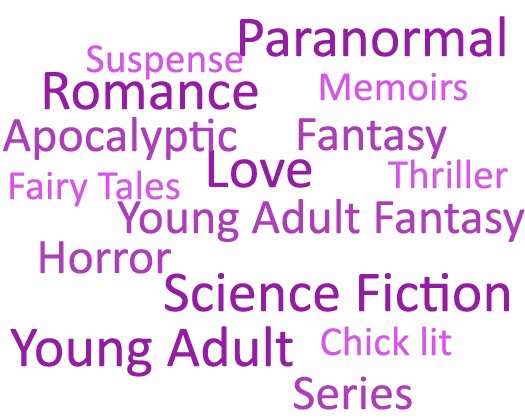
After looking at the tag cloud from Amazon, I had an epiphany — probably one I should have had years ago. What use are book specific tags if no one knows about my book? Why would anyone search for “Arrabella,” the MC of Escaping Fate, is they didn’t know anything about my book? I saw that I had done the same thing for my other books, choosing tags like Libby and Milo, and similar words that only applied to The Destroyer Series. 
What I realized after studying the cloud was that people are not going onto Amazon and searching for a particular book most of the time. They are searching for whatever genre they like to read and then perusing the search results for something that catches their eye. 

So what did I do after having this epiphany? 

I went and changed the keywords on all my books on the various sites I have my books listed. What did I change them to? Instead of sticking with book specific tags, I chose tags that will help readers find my books within the genres they like to read. 
I write YA fiction ranging from paranormal to science fiction and urban fantasy. So my new tags include words like “Young Adult,” “Science Fiction,” Paranormal,” and “Fantasy.” And because I love to add in a good romance to compliment each storyline, I also included tags like “Romance, “Love,” and “Paranormal Romance.” 

What now? 

Well, now I see how this realization pans out. Will better keywords that are directed at readers who have no clue about me or my books help get my books in their search results better than book specific tags? I’ll just have to wait and see. I’m excited to see the impact it will have. I love learning new things about publishing and marketing, and this one is so simple yet important. 
I’ve been learning more about using Pintrest as and author as well, so check back next week for a new post and some new ideas.