
I just finished listening to Brave New World by Aldus Huxley and there were three main lessons I took away from the book.

Those who aren’t familiar with the novel should know a few things. It was published in 1932 and is a dystopian fiction novel set in largely London and, for a brief period, in a Native American reservation in New Mexico. The story explores themes of society vs. the individual, passion vs. stability, and the price of happiness.
Lesson 1: Use unique structure purposefully
In the early chapters, Huxley has a section where the Controller is explaining the dystopian world to the reader through a tour he’s giving to research students visiting a fertilization factory.
During this explanation, there are insertions of other character’s points of view, sometimes breaking in after only a few lines or mid-sentence. At first, the style was very distracting, especially since I was listening to the book and didn’t have visual cues of the shifts. The patched together structure was interesting, though, because as the Controller is explaining the process of creating humans ideal for their society, the reader is given examples of how these methods control the behavior of individuals.
If you choose to use a unique structure in your writing, make sure there is a good reason for it, or it may only serve to confuse or distract readers.
Lesson 2: Don’t preach to readers to get a point across
I have a personal dislike for preachy books, probably because I grew up in a very religious household and had more than enough of that growing up.
If you have a particular point or philosophy you want to share with readers, do so through the characters and story and NOT by directly telling them what the right way or answer is. Let them discover the idea or answer by experiencing the story.
Huxley does this very well in this book. The Controllers and other characters do, at times, directly state the theories and philosophies of the society, however there is always a skeptical character to give the reader another point of view or at least make them question the legitimacy of the concept.
Each of the four main characters have viewpoints that differ from the main society in different ways as well, so the reader isn’t inundated with only one character’s arguments or ideas. Each character is also given a strong reason for seeing things differently, so their struggle with society feels genuine and unforced.
As the reader, there were times it was hard to decide which idea or concept was “right” or “better” because Huxley did such a good job of showing both sides of an argument. Instead of telling the reader how to think, the story asks reader to thoughtfully consider the philosophies presented and decide for themselves.
Lesson 3: An unsatisfying ending can work when the story calls for it
Just as there were times while reading that I couldn’t fully commit to one side or another of an argument or philosophy, I couldn’t really think of a way the story could end in a satisfying way because the issues were too big to be wrapped up simply and easily.
Maybe Huxley felt the same, or maybe his purpose wasn’t to provide answers (which I think is very likely), because the book doesn’t have a satisfying end in the sense that any of the issues are solved. A few of the characters find relatively acceptable ends but, for the most part, story aspects are left either unhappy or up to the reader to puzzle out.
It didn’t bother me to have the book end like this, though, because a neatly wrapped up ending where everything was solved would have felt manufactured and trite. The purpose of the novel seemed to be to get readers to think more deeply about how individuals and society have to reach a balance, what it means to be happy, whether passion and stability can coexist, and who or what should set moral and ethical boundaries.
A story doesn’t need a satisfying ending if the purpose is to leave readers unsatisfied enough to keep thinking about the problem and the possible solutions.
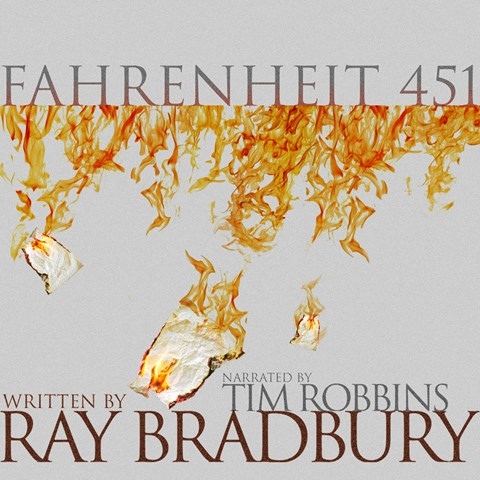 In my continuing quest to read more of the classics, we listened to Fahrenheit 451 on a summer road trip. My kids are 12 and 15, and they really got into the story. It turned out that my son had to read this in school this year, but for some reason I never had to read this in high school. Instead I was slogging through Great Expectations and The Iliad…
 Let me start by saying that after we listened to Fahrenheit 451 we watched the HBO movie version, and I actually enjoyed it quite a bit. No, it was not the original story. That’s okay. BUT…one of the changes we were all most disappointed by was that Guy’s wife Mildred was completely written out of the story.
 For those who haven’t read or seen Life of Pi, it’s about a young man who survives his ship sinking in the middle of the sea during a journey from India to Canada. He makes it to a life boat, but finds himself in the company of several of the zoo animals his family was transporting…including a Bengal tiger named Richard Parker.
 Infodumping is often a struggle for writers who do in-depth research for a book. You found out all these awesome things about whatever and now you HAVE TO SHARE THEM ALL! Unless you are writing a non-fiction book about your topic that is meant to give a detailed history of whatever, please, please, please for the love of all things bookish DO NOT vomit up every seemingly fascinating tidbit of research you uncovered while preparing to write your book.
 I also struggled to listen at length to the religious discussions, which I usually enjoy quite a bit. I think religion is a fascinating topic and enjoy learning about many different religions. What I didn’t enjoy was, again, too much straight information that took me away from the story, and the sometimes condescending way the information was presented. I don’t hold with any particular religion, but I was still bothered by the sense I got that if a reader didn’t agree with the author’s opinions on eating meat, practicing multiple religions at once, or who or what God or gods might be they were simply wrong or not as smart as the author. I enjoy learning about how others view God, religion, the Universe, etc., but in a way that invites thoughtfulness rather than looking down on others’ beliefs or viewpoints.
 In 2017 I’ll continue my quest, and share you all what I’m learning along the way.
 This was a different type of book than I’d normally pick up, but my friend Denise recommended it so I thought I’d give it a try. This is a coming of age story, but it doesn’t really have a focused plot. The reader simply follows the characters’ lives for a certain period of time. I have to admit, it wasn’t one of my favorite books for that reason. I like a clear-cut storyline I can follow.
 USA Today Bestselling Author DelSheree Gladden